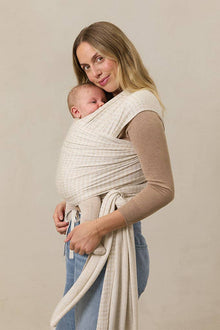
A carrier keeps your hands free on busy days and is easier than a stroller on stairs, trails and crowded streets. Most families use both, so browse our baby strollers for longer walks and our baby car seats for car trips. A diaper bag backpack works well with a front carrier because it keeps the weight balanced across your body.
You’ll find stroller organizers, wipes cases and travel bags in baby gear and stroller accessories, and everything for getting around in Gear & Travel. Our baby carrier research explains how we review each carrier, and our stage checklists show what you’ll need at each age.
Frequently Asked Questions
Which baby carrier is best for a newborn?
Stretchy wraps and soft structured carriers with a newborn setting are the most common choices for the first few months. They hold your baby close and upright with their head supported. Check the minimum weight on the label, because many carriers start at 7 or 8 pounds, and some need an infant insert at first.
How do I wear my baby safely in a carrier?
Follow the TICKS checklist. The carrier should be Tight, your baby should be In view at all times, and they should be Close enough to kiss. Keep their chin off their chest, and make sure their back is Supported in a natural position. Check that you can always see your baby’s face and that nothing covers their nose or mouth.
What does a hip-healthy carrier mean?
A hip-healthy carrier holds your baby’s legs in an “M” position, with their knees level with or higher than their bottom and their thighs supported from knee to knee. This position supports healthy hip development. The International Hip Dysplasia Institute recognizes carriers that support this position.
When can my baby face outward in a carrier?
Wait until your baby has strong head and neck control, which is often around 5 to 6 months, and only use a carrier made for facing out. Keep outward-facing time short, because babies can get overstimulated. Turn them to face you if they get tired or start to fall asleep.
Can my baby nap in a carrier?
Yes, babies often fall asleep in a carrier, and that’s fine while you’re awake and keeping the TICKS checklist in mind. Keep their face visible and their chin off their chest. If you want to sit down or rest, move your baby to a firm, flat crib or bassinet. Bend at your knees, not your waist, when you pick something up.
What is the difference between a wrap, a buckle carrier and a hip seat?
A stretchy wrap is one long piece of fabric that you tie around your body, and it’s best for newborns and young babies. A soft buckle carrier has a padded waistband and buckles, which makes it quicker to put on and more supportive as your baby gets heavier. A hip seat or toddler carrier is made for bigger babies and toddlers who want to be held for short stretches.
Can I use a baby carrier in the car?
No. A carrier doesn’t protect your baby in a crash, so never wear your baby in a moving vehicle. Your child should always ride in a properly installed car seat that fits their age and size.
Do you offer free shipping and returns on baby carriers?
Yes. Every order ships free with hassle-free returns, and first-time customers get 15% off at checkout. See our shipping and returns pages for details.